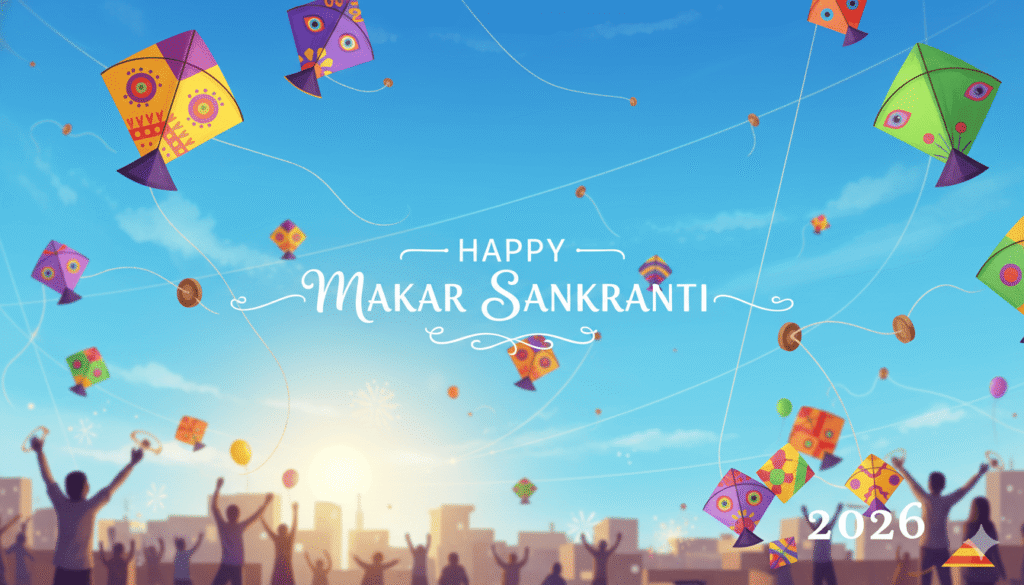
Makar Sankranti 2026 marks one of India’s most auspicious harvest festivals, celebrated on January 14, 2026. This sacred occasion honors the Sun God’s transition into Capricorn (Makar Rashi). Furthermore, it signifies the end of winter solstice and the beginning of longer, warmer days. Consequently, millions across India celebrate this joyous festival with kite flying, holy dips, and traditional delicacies.
What is Makar Sankranti 2026?
Makar Sankranti 2026 represents the astronomical phenomenon when the Sun enters the zodiac sign of Makara (Capricorn). Specifically, this celestial event occurs during the winter season. The festival is rooted in ancient Vedic traditions. Moreover, it celebrates the harvest season across various Indian states.
Unlike most Hindu festivals based on the lunar calendar, Makar Sankranti follows the solar calendar. Therefore, it typically falls on January 14 or 15 every year. In 2026, the festival will be observed on Wednesday, January 14. Additionally, this date remains relatively consistent across generations.
Uttarayan 2026: The Auspicious Transition
Uttarayan refers to the six-month period when the Sun travels northward. This period is considered highly auspicious in Hindu philosophy. In addition, it symbolizes progress, prosperity, and spiritual enlightenment. The Uttarayan phase begins precisely on Makar Sankranti day.
Makar Sankranti 2026 Date and Muhurat Timings
Understanding the precise timing enhances the spiritual benefits of this festival. Here are the key details for Makar Sankranti 2026:
- Festival Date: Wednesday, January 14, 2026
- Sankranti Moment: Expected around 02:44 AM (IST) – varies by location
- Punya Kaal Muhurat: 07:15 AM to 12:30 PM (approximately 5 hours 15 minutes)
- Maha Punya Kaal: 07:15 AM to 09:00 AM (most auspicious period)
- Best Time for Holy Dip: Dawn to 12:30 PM at sacred rivers
These timings are calculated based on traditional Hindu almanacs. However, slight variations may occur depending on geographical location. Therefore, consulting local pundits is advisable for precise timings.
Significance of Makar Sankranti 2026
This festival holds profound spiritual and cultural importance. Primarily, it marks the transition from darkness to light. Furthermore, it symbolizes the triumph of knowledge over ignorance. The Sun’s northward journey represents hope and new beginnings.
Spiritual Importance
According to ancient scriptures, Uttarayan is the most sacred period. Specifically, it is believed that souls departing during this time attain moksha (liberation). Consequently, the Mahabharata mentions Bhishma Pitamah waiting for Uttarayan to leave his mortal body. This highlights the festival’s spiritual gravity.
Agricultural Significance
Makar Sankranti celebrates the harvest of winter crops. Farmers express gratitude for bountiful yields. In addition, they pray for prosperity in upcoming agricultural cycles. This connection to agriculture makes it a truly grounded celebration.
How Makar Sankranti 2026 is Celebrated Across India
India’s diversity shines through regional celebration variations. Nevertheless, common threads unite these traditions. Let’s explore how different states observe this festival.
Gujarat and Rajasthan: Uttarayan Kite Festival
In Gujarat, Makar Sankranti is synonymous with the International Kite Festival. The sky transforms into a vibrant canvas of colorful kites. Furthermore, friendly competitions create an electrifying atmosphere. People shout “Kai Po Che!” when they cut opponent’s kites.
Traditional foods include undhiyu (mixed vegetable dish) and chikki (jaggery brittle). Moreover, families gather on rooftops for kite-flying marathons. The celebration continues well into the night with illuminated kites.
Punjab: Lohri and Maghi
Punjabis celebrate the eve as Lohri with bonfires and traditional songs. The next day becomes Maghi. Specifically, people take holy dips in rivers and prepare special meals. Additionally, rewri and gajak are distributed among neighbors.
Tamil Nadu: Pongal Festival
The four-day Pongal festival begins around Makar Sankranti. Rice is boiled in new earthen pots until it overflows. This symbolizes abundance and prosperity. Moreover, homes are decorated with colorful kolam (rangoli) designs.
Assam: Magh Bihu
Assamese communities celebrate Magh Bihu with great enthusiasm. Traditional games and buffalo fights mark the occasion. Furthermore, special rice cakes called pitha are prepared. Community feasts strengthen social bonds during this time.
Maharashtra: Til-Gul Distribution
Maharashtrians exchange til-gul (sesame and jaggery sweets) with the phrase “til-gul ghya, god god bola” (take til-gul and speak sweetly). This tradition promotes harmony and forgiveness. Additionally, newly married women receive gifts during their first Sankranti.
Traditional Foods for Makar Sankranti 2026
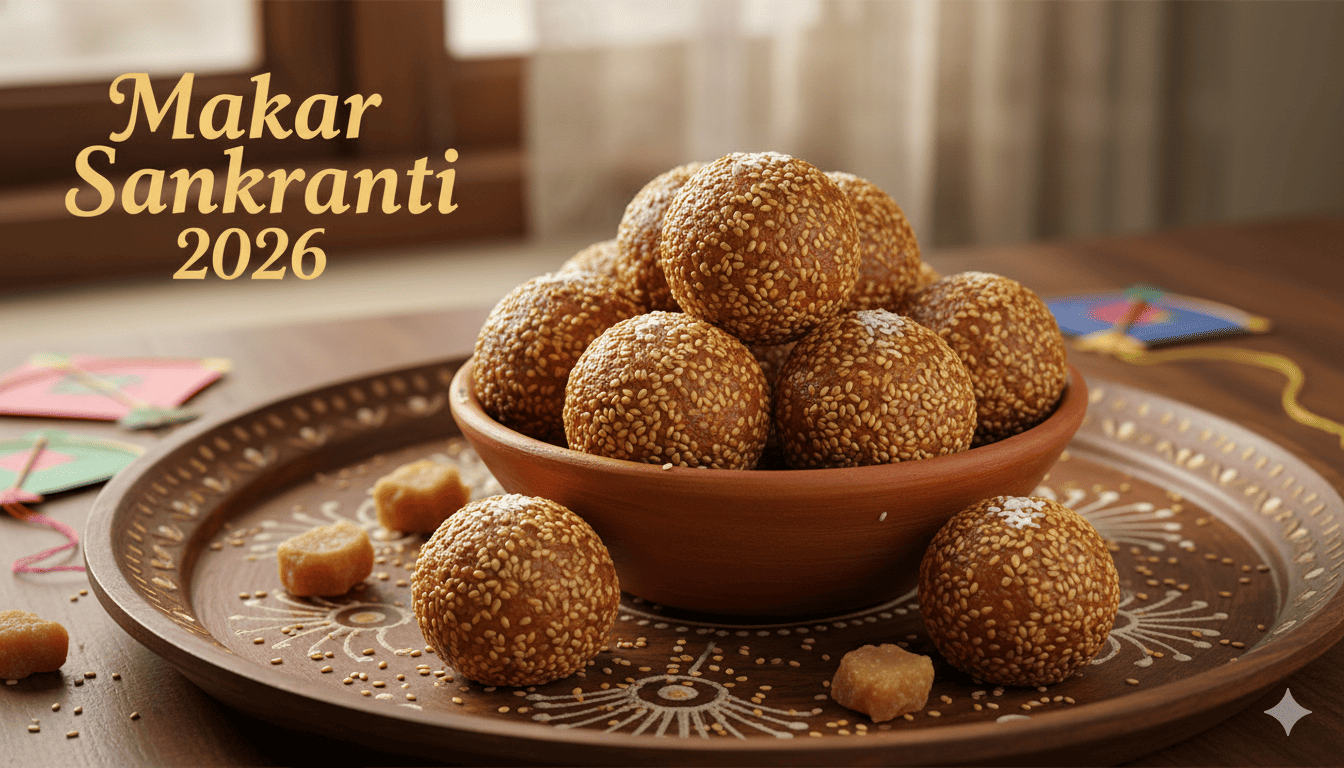
Food plays a central role in festival celebrations. Specifically, sesame seeds (til) and jaggery (gur) feature prominently. These ingredients provide warmth during winter months.
Popular Makar Sankranti Dishes
- Til Ladoo: Sweet balls made from sesame and jaggery
- Gajak: Crunchy sesame brittle with jaggery
- Khichdi: Rice and lentil dish offered to the Sun God
- Pongal: Sweet rice preparation from South India
- Puran Poli: Sweet flatbread stuffed with lentils and jaggery
- Undhiyu: Mixed vegetable delicacy from Gujarat
These dishes balance taste with nutritional value. Moreover, they align with Ayurvedic principles for winter wellness. Families prepare these delicacies days in advance.
Rituals and Traditions for Makar Sankranti 2026
Observing proper rituals enhances the festival’s spiritual benefits. Here are essential practices to follow:
Holy Bath (Snan)
Taking a dip in sacred rivers cleanses sins and brings merit. Rivers like Ganga, Yamuna, and Godavari become pilgrimage sites. Furthermore, adding sesame seeds to bathwater is considered auspicious. The pre-dawn bath holds maximum spiritual value.
Charitable Giving (Daan)
Donation holds special significance on this day. Specifically, giving til, jaggery, warm clothes, and blankets earns blessings. Additionally, feeding Brahmins and the needy generates positive karma. Many organize community kitchens during this period.
Sun Worship (Surya Puja)
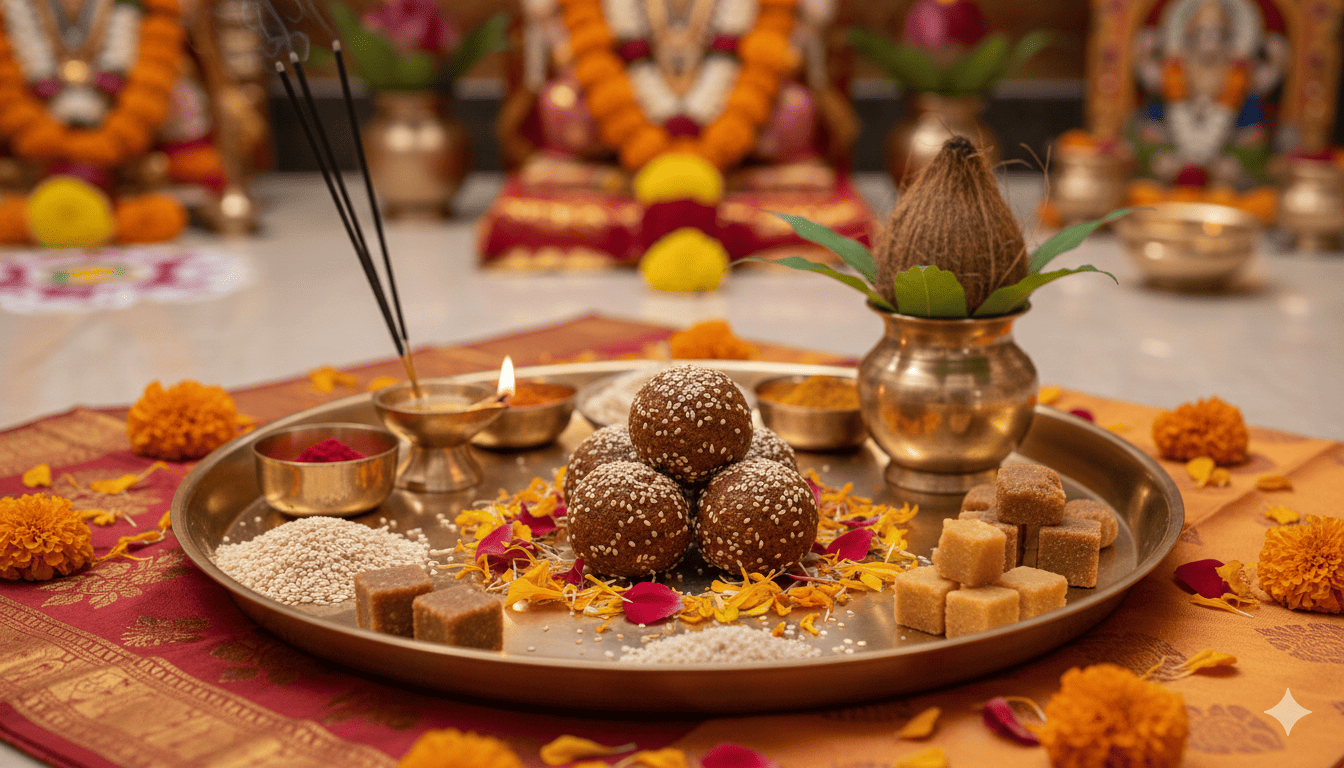
Offering water (arghya) to the rising Sun is mandatory. Devotees chant Surya mantras during this ritual. Moreover, offerings include flowers, incense, and traditional sweets. This practice expresses gratitude for life-sustaining energy.
Kite Flying
Beyond recreation, kite flying holds symbolic meaning. It represents reaching toward the divine. Furthermore, exposure to morning sunlight provides essential Vitamin D. The competitive spirit fosters community bonding.
Makar Sankranti 2026: Preparation Checklist
Proper preparation ensures a smooth celebration. Consequently, start planning early for maximum enjoyment. Here’s a comprehensive checklist:
- Purchase fresh sesame seeds, jaggery, and rice one week ahead
- Clean and decorate your home with traditional rangoli designs
- Buy quality kites and strings (manja) for flying activities
- Prepare donation items including warm clothes and food grains
- Plan your visit to nearby rivers or temples for holy rituals
Additionally, inform family members about muhurat timings. This coordination ensures everyone participates meaningfully. Furthermore, book travel tickets early if visiting sacred pilgrimage sites.
Environmental Considerations for Uttarayan 2026
While celebrating, we must protect our environment. Traditional practices sometimes conflict with ecological concerns. Therefore, adopting sustainable approaches becomes essential.
Eco-Friendly Kite Flying
Conventional manja (kite string) contains glass and metal particles. These harm birds and the environment. Consequently, switch to biodegradable cotton strings. Moreover, avoid plastic kites that pollute when abandoned.
Reducing Waste
Use reusable plates instead of disposable ones. Additionally, compost organic waste from food preparations. These small changes create significant positive impact. Furthermore, encourage community clean-up drives post-celebration.
Makar Sankranti 2026 and Astrological Significance
Astrology plays a crucial role in understanding this festival. The Sun’s entry into Capricorn creates powerful cosmic energy. Specifically, this transition affects all zodiac signs differently.
Capricorn represents discipline, responsibility, and material success. Therefore, Uttarayan 2026 favors new business ventures and investments. Moreover, starting educational pursuits during this period yields excellent results. Consulting astrologers can provide personalized guidance for harnessing this energy.
Health Benefits of Makar Sankranti Traditions
Ancient customs incorporate profound health wisdom. Sesame seeds provide calcium and healthy fats. Furthermore, they generate body heat during cold months. Jaggery purifies blood and boosts immunity.
Early morning sun exposure regulates circadian rhythms. Additionally, kite flying provides physical exercise and stress relief. These traditions demonstrate the holistic approach of Vedic culture.
For More This Type of Content Visit Over Page PawsPurrs.in
External Link: For authentic muhurat timings, consult Drik Panchang, a trusted Vedic calendar resource.
Makar Sankranti 2026 Wishes and Messages
Sharing warm wishes strengthens relationships during festivals. Here are thoughtful messages for Makar Sankranti 2026:
- “May the Sun God bless you with wisdom and prosperity this Makar Sankranti 2026!”
- “Wishing you a joyful Uttarayan filled with sweet moments and soaring achievements!”
- “May your life be as colorful as kites in the sky. Happy Makar Sankranti 2026!”
- “Let’s celebrate the harvest of happiness together. Til-gul ghya, god god bola!”
Furthermore, social media platforms enable instant sharing of festive greetings. Creative graphics and videos enhance message impact. Therefore, prepare your wishes beforehand for timely sharing.
Conclusion: Embracing Makar Sankranti 2026
Makar Sankranti 2026 offers a beautiful opportunity to reconnect with traditions. This festival celebrates nature’s cycles and human gratitude. Moreover, it reminds us to balance material pursuits with spiritual growth.
As January 14, 2026 approaches, prepare to embrace this auspicious occasion wholeheartedly. Participate in rituals, share traditional foods, and fly kites with loved ones. Furthermore, extend kindness through charitable acts. These practices honor ancient wisdom while creating contemporary joy.
Mark your calendars, gather your families, and welcome Uttarayan 2026 with open hearts. May the Sun God illuminate your path with success and happiness!
Frequently Asked Questions About Makar Sankranti 2026
When is Makar Sankranti 2026?
Makar Sankranti 2026 falls on Wednesday, January 14, 2026. The Sankranti moment occurs around 02:44 AM IST. The most auspicious time for rituals (Maha Punya Kaal) extends from 07:15 AM to 09:00 AM on this date.
Why is Makar Sankranti celebrated?
Makar Sankranti celebrates the Sun God’s transition into Capricorn zodiac sign and the beginning of Uttarayan (northward journey). It marks the harvest season, the end of winter solstice, and symbolizes the victory of light over darkness. Additionally, it represents new beginnings and spiritual enlightenment.
What is the difference between Makar Sankranti and Uttarayan?
Makar Sankranti refers to the specific day when the Sun enters Capricorn (January 14, 2026). Uttarayan represents the six-month period when the Sun travels northward, beginning on Makar Sankranti. Essentially, Makar Sankranti is the festival day, while Uttarayan is the auspicious period it initiates.
What foods are traditionally eaten during Makar Sankranti?
Traditional Makar Sankranti foods include til ladoo (sesame balls), gajak (sesame brittle), khichdi (rice-lentil dish), puran poli (sweet flatbread), and pongal (sweet rice). Sesame seeds and jaggery feature prominently as they provide warmth and nutritional benefits during winter months.
Can we use regular kite strings for Uttarayan 2026?
It’s better to avoid traditional glass-coated manja strings as they harm birds and the environment. Instead, use eco-friendly cotton or biodegradable strings for kite flying during Uttarayan 2026. This sustainable choice protects wildlife while maintaining the festival’s joyful spirit.