Are you spending hours on tasks that could take minutes? In 2026, the average person wastes over 2.5 hours daily on inefficient routines that free mobile apps could handle effortlessly. Your smartphone holds the power to transform chaos into streamlined simplicity, yet most people use less than 10% of the available tools that could revolutionize their daily lives.
This comprehensive guide reveals the best free mobile apps that genuinely make your life easier. You’ll discover proven applications across productivity, health, finance, communication, and organization that thousands of users rely on daily. Whether you’re managing a busy schedule, tracking fitness goals, or simply trying to reclaim lost time, these handpicked apps deliver real results without costing a penny.
Table of Contents
- Why Free Mobile Apps Matter in 2026
- Top Productivity Apps
- Health & Wellness Applications
- Financial Management Tools
- Communication & Collaboration
- Organization & Life Management
- Learning & Personal Development
- Entertainment & Lifestyle
- How to Choose the Right Apps
- FAQs
Why Free Mobile Apps Matter in 2026
The mobile app landscape has evolved dramatically. Free mobile apps now offer premium features that previously required expensive subscriptions. Consequently, you can access professional-grade tools for task management, health tracking, and financial planning without breaking your budget.
Furthermore, these applications integrate seamlessly with your existing digital ecosystem. They sync across devices, share data intelligently, and automate repetitive tasks that once consumed valuable hours. The best part? You’re not sacrificing quality for affordability.
💡 Expert Tip: Don’t download every app you find. Start with 3-5 apps addressing your biggest pain points, master them, then expand your toolkit strategically.
Top Productivity Apps to Supercharge Your Day
Todoist: The Ultimate Task Manager
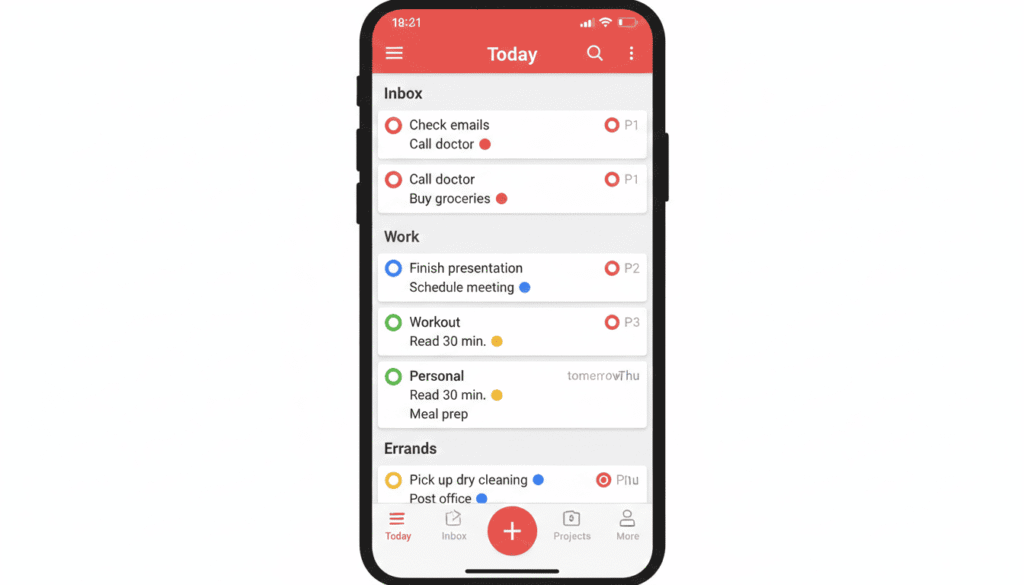
Todoist remains the gold standard for free task management in 2026. This powerful app transforms overwhelming to-do lists into achievable daily wins through intelligent prioritization and natural language processing.
Key Features:
- Natural language task entry (“Buy groceries tomorrow at 5pm”)
- Priority levels and color-coded organization
- Project templates for recurring workflows
- Karma system for motivation tracking
- Cross-platform synchronization
The free version supports up to 5 active projects with 5 collaborators per project. Additionally, you get access to basic productivity tracking and deadline reminders that keep you accountable throughout the day.
Notion: Your All-in-One Workspace
Notion revolutionizes how you organize information. This versatile platform combines notes, databases, wikis, and project management into one seamless free mobile app that adapts to your workflow.
Whether you’re planning meals, tracking habits, or managing a side business, Notion’s customizable templates provide the perfect foundation. Meanwhile, its powerful database features let you create interconnected systems that grow with your needs.
Practical Use Cases:
- Personal wiki for important information
- Habit tracking with visual progress indicators
- Recipe collection with searchable tags
- Meeting notes with action item extraction
- Content calendar for social media planning
Forest: Stay Focused, Grow Trees
Forest gamifies productivity by growing virtual trees when you stay focused. This innovative app combats phone addiction while helping you build deep work habits that dramatically improve output quality.
Specifically, you plant a seed when starting a focus session. The tree grows as long as you stay away from distracting apps. Leave the app prematurely, and your tree dies. Over time, you’ll cultivate an entire forest representing your productive hours.
⚠️ Important Note: Forest works best when you identify your 3 most distracting apps and block them during focus sessions. Generic blocking rarely succeeds.
Health & Wellness Applications That Actually Work
MyFitnessPal: Comprehensive Nutrition Tracking
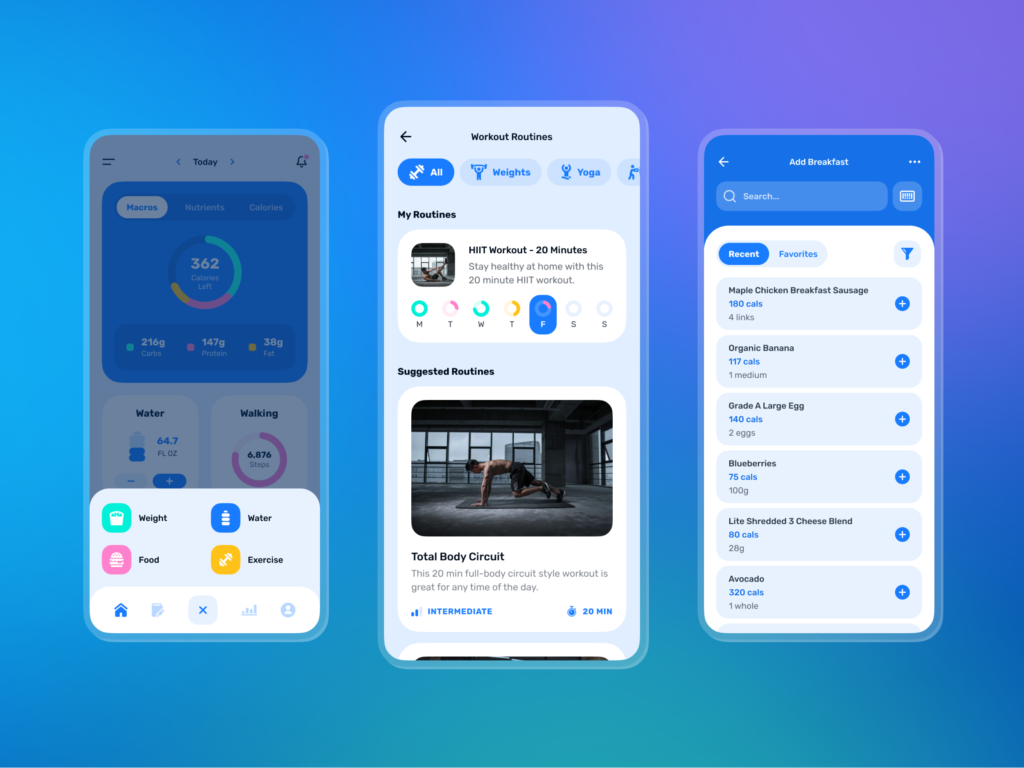
MyFitnessPal continues leading the free nutrition tracking space with its massive food database exceeding 14 million items. This life-simplifying mobile application makes calorie counting effortless through barcode scanning and meal memory features.
The app’s strength lies in its simplicity. You scan, search, or voice-input meals, and MyFitnessPal calculates macronutrients automatically. Furthermore, it syncs with fitness trackers to balance calories consumed against calories burned, providing real-time insights into your nutritional balance.
Success Statistics:
- Users who log consistently lose 2x more weight [source: MyFitnessPal Research]
- 80% of successful users track daily for at least 3 months [source: Health App Study 2025]
- Average time investment: 10 minutes daily
Headspace: Meditation Made Simple
Mental health takes center stage in 2026, and Headspace offers guided meditation that fits any lifestyle. The free version provides foundational mindfulness courses, breathing exercises, and sleep sounds that reduce stress and improve focus.
Each session ranges from 3 to 10 minutes, making meditation accessible even during lunch breaks. Moreover, Headspace’s friendly animations explain complex mindfulness concepts in ways anyone can understand and apply immediately.
Fitbod: Personalized Workout Planning
Fitbod generates customized strength training workouts based on available equipment, fitness level, and recovery status. This intelligent app adjusts difficulty progressively, preventing plateaus while minimizing injury risk.
The free tier offers limited workout history but includes full exercise instructions with video demonstrations. Therefore, beginners and experienced lifters alike can execute proper form without hiring expensive personal trainers.
🎯 Quick Takeaway: Health apps succeed when they reduce friction. Choose apps that integrate seamlessly into existing routines rather than requiring complete lifestyle overhauls.
Financial Management Tools for Smarter Money Habits
Mint: Complete Financial Overview
Mint aggregates all your financial accounts into one comprehensive dashboard. This powerful free app tracks spending automatically, categorizes transactions, and alerts you to unusual activity that might indicate fraud or budget overruns.
In contrast to manual budgeting spreadsheets, Mint updates in real-time as transactions occur. You’ll see exactly where money goes without tedious data entry or complex formulas.
Core Capabilities:
- Automatic transaction categorization
- Bill payment reminders
- Credit score monitoring
- Budget creation and tracking
- Investment portfolio overview
- Custom spending alerts
[Image Placeholder: mint-budget-tracker-spending-categories-2026.jpg]
Alt Text: Mint mobile app showing budget tracking dashboard with spending categories, financial goals, and monthly expense breakdown visualization
Caption: Gain complete financial clarity with Mint’s automatic expense tracking
Splitwise: Simplify Shared Expenses
Splitwise eliminates awkward money conversations among roommates, friends, and travel companions. This essential smartphone app for everyday use tracks who owes what, calculates fair splits, and settles balances through integrated payment options.
Additionally, Splitwise handles complex scenarios like unequal splits, percentage-based divisions, and itemized bill sharing. The app even suggests optimal payment arrangements to minimize total transactions when settling group expenses.
YNAB (You Need A Budget): Zero-Based Budgeting
While YNAB offers a premium tier, its free trial and educational resources provide exceptional value. The zero-based budgeting methodology forces intentional money decisions by assigning every dollar a specific purpose before spending occurs.
This approach fundamentally shifts your relationship with money. Instead of tracking past spending, you plan future allocation, creating financial awareness that naturally reduces waste and builds savings momentum.
💰 Money-Saving Insight: Users following YNAB principles save an average of $600 in their first two months [source: YNAB User Survey 2025].
Communication & Collaboration Apps
Slack: Team Communication Refined
Slack revolutionized workplace communication and now serves personal communities equally well. The free plan supports unlimited messages, 10 third-party integrations, and 1-on-1 video calls that streamline group coordination.
Create channels for different topics, share files instantly, and search conversation history to find information quickly. Consequently, important discussions never get lost in endless email threads or fragmented text messages.
Discord: Beyond Gaming Communities
Discord evolved from gaming-focused chat into a versatile community platform. Free servers support unlimited members, voice channels, screen sharing, and custom bots that automate community management tasks.
Whether organizing book clubs, hobby groups, or study sessions, Discord provides robust tools for building engaged communities. The mobile app ensures you stay connected even when away from your computer.
Telegram: Privacy-Focused Messaging
Telegram prioritizes privacy while offering features that outshine mainstream messaging apps. End-to-end encrypted chats, self-destructing messages, and massive file sharing (up to 2GB) make Telegram ideal for secure communication.
Furthermore, Telegram’s channel feature lets you broadcast updates to unlimited subscribers, perfect for newsletters, announcements, or content distribution without algorithmic suppression.
Organization & Life Management Solutions
Google Keep: Quick Note Capture
Google Keep excels at capturing fleeting thoughts before they disappear. Voice notes, photos, checklists, and drawings sync instantly across devices, ensuring brilliant ideas survive until you can act on them.
The app’s color-coding and label system create visual organization without complex folder hierarchies. Meanwhile, location-based and time-based reminders trigger notes precisely when you need them.
Practical Applications:
- Voice memos during commutes
- Photo-based shopping lists
- Shared grocery lists with family
- Meeting preparation checklists
- Quick idea capture for projects
Trello: Visual Project Management
Trello’s board-and-card system visualizes workflows with satisfying simplicity. Drag tasks between columns representing different stages, attach files and comments, and collaborate with team members on shared boards.
The free tier offers unlimited personal boards, 10 team boards, and essential power-ups that extend functionality. Therefore, individuals and small teams can manage complex projects without premium subscriptions.
Evernote: Digital Filing Cabinet
Evernote remains the premier note-taking app for detailed information storage. Web clipping, document scanning, and powerful search make Evernote your external brain for important reference material.
Specifically, Evernote’s OCR technology makes text within images and PDFs searchable, transforming messy paper documents into organized digital archives. The free plan provides 60MB monthly upload limit across two devices.
📌 Organization Pro Tip: Use the “PARA” method (Projects, Areas, Resources, Archives) to structure notes in any organizational app for maximum retrieval efficiency.
Learning & Personal Development Platforms
Duolingo: Language Learning Gamified
Duolingo makes language acquisition addictive through game-like lessons, streak tracking, and competitive leaderboards. The free version offers complete language courses with only occasional ad interruptions.
Short 5-minute lessons fit naturally into waiting time, transforming idle moments into productive learning sessions. Moreover, Duolingo’s adaptive algorithm adjusts difficulty based on performance, maintaining optimal challenge levels.
Learning Statistics:
- 34 hours of Duolingo equals one university semester [source: City University Study]
- Daily users show 3x better retention than sporadic learners [source: Duolingo Effectiveness Report 2025]
Khan Academy: World-Class Education Free
Khan Academy democratizes education with comprehensive courses spanning mathematics, science, economics, arts, and test preparation. Expert-created video lessons paired with practice exercises create complete learning pathways.
The mobile app downloads lessons for offline viewing, perfect for learning during commutes or travel. Additionally, personalized dashboards track progress and identify knowledge gaps requiring extra attention.
Coursera: University Courses in Your Pocket
Coursera partners with top universities to offer audit-free courses covering virtually every subject imaginable. While certificates require payment, accessing full course content including videos, readings, and quizzes costs nothing.
This time-saving mobile app lets you earn credentials from institutions like Stanford, Yale, and Google at your own pace. Furthermore, many courses update regularly to reflect current industry standards and emerging trends.
Entertainment & Lifestyle Apps Worth Your Time
Spotify: Music for Every Moment
Spotify’s free tier delivers unlimited music streaming with occasional ads. Curated playlists, personalized recommendations, and podcast integration make Spotify indispensable for audio entertainment.
The app learns your preferences over time, surfacing new artists and genres that match your taste. Meanwhile, collaborative playlists let friends share music discoveries and build shared soundtracks for experiences.
Libby: Free Library Books Instantly
Libby connects you to your local library’s digital collection, offering free ebooks and audiobooks on demand. Simply enter your library card, browse available titles, and borrow instantly without late fees or physical trips.
Consequently, voracious readers access bestsellers and classics without subscription costs. The app even recommends titles based on reading history and sends notifications when waitlisted books become available.
AllTrails: Outdoor Adventure Guide
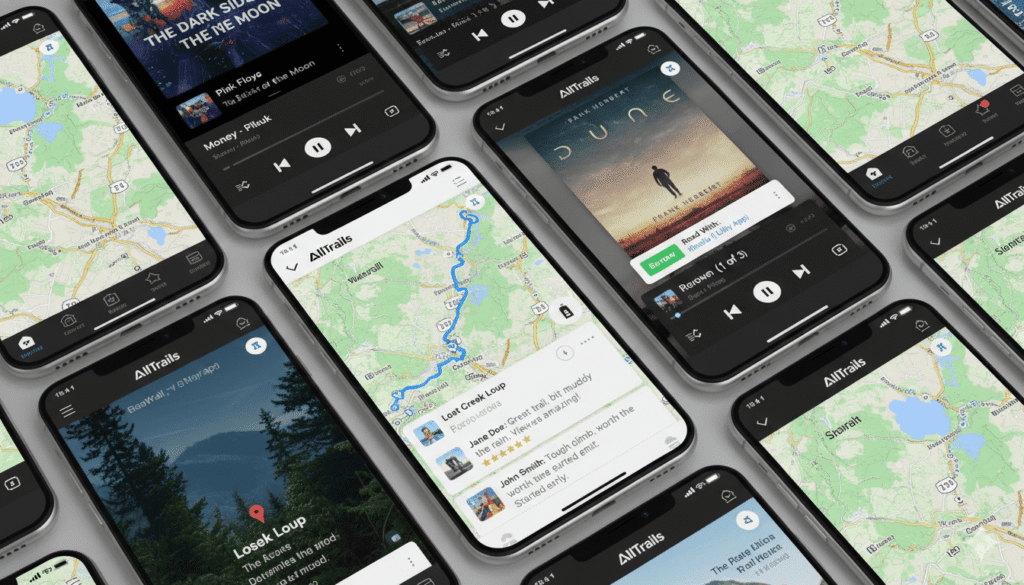
AllTrails maps over 400,000 hiking, biking, and running trails worldwide with detailed reviews, photos, and difficulty ratings. The free version provides full trail information, though offline maps require premium membership.
Filter trails by length, elevation gain, and user ratings to find perfect outdoor experiences matching your fitness level and available time. Additionally, the community uploads current trail conditions, alerting you to closures or hazards.
How to Choose the Right Apps for Your Needs
Selecting the best free apps for daily tasks requires strategic thinking beyond download impulses. Follow this decision framework to build an effective app ecosystem:
Identify Your Top 3 Pain Points
List specific problems consuming time or causing stress. “I forget important tasks” gets solved differently than “I waste time on social media.” Precision in problem definition leads to better app selection.
Research Before Downloading
Read recent reviews focusing on comments from the past three months. App quality changes rapidly, so outdated reviews mislead. Look for patterns in feedback rather than single extreme opinions.
Test One Category at a Time
Don’t overhaul your entire digital life simultaneously. Master productivity apps before adding finance tools. This focused approach prevents overwhelming yourself with new interfaces and competing systems.
Give Apps a Fair Trial
Commit to 21 days of consistent use before judging effectiveness. Initial friction often reflects learning curves rather than fundamental flaws. Most people quit valuable apps prematurely because they expect instant mastery.
Delete Ruthlessly
Unused apps clutter your phone and fragment attention. If you haven’t opened an app in 30 days, delete it. You can always reinstall later if needs change.
✅ Selection Checklist:
- Solves a specific, measurable problem
- Has 4+ star rating with 10,000+ reviews
- Updates regularly (check release notes)
- Clear privacy policy you understand
- Reasonable free tier without critical limitations
- Integrates with apps you already use
Key Takeaways
- Start strategically: Focus on apps addressing your biggest time wasters or stress points rather than downloading everything available
- Free doesn’t mean inferior: Modern free mobile apps rival premium alternatives in quality and functionality for most users
- Integration matters: Apps that sync with your existing tools provide exponentially more value than isolated solutions
- Consistency beats features: A simple app used daily outperforms complex tools used occasionally
- Privacy awareness: Review permissions and data policies before granting access to sensitive information
- Regular evaluation: Quarterly audits of installed apps ensure your toolkit evolves with changing needs
- Community wisdom: User reviews and online communities reveal real-world performance beyond marketing claims
Conclusion
The best free mobile apps to make daily life easier in 2026 aren’t about having the newest technology—they’re about solving real problems efficiently. You’ve now discovered proven applications across productivity, health, finance, communication, organization, learning, and lifestyle that deliver measurable improvements without financial investment.
Start today by choosing three apps from different categories that address your most pressing challenges. Install them, complete initial setup thoughtfully, and commit to 21 days of consistent use. Track the time saved and stress reduced to quantify the value these digital tools provide.
Your smartphone can be a distraction or a powerful ally in creating the life you want. The apps in this guide tip the balance decisively toward the latter. Download strategically, use intentionally, and watch as small efficiency gains compound into transformative life improvements.
Ready to reclaim your time? Choose your first app now and take the first step toward a simpler, more organized daily routine.
Frequently Asked Questions
Q: Are free mobile apps really as good as paid versions?
For most users, yes. Free tiers of quality apps provide 80-90% of functionality that premium versions offer. The free version of apps like Todoist, MyFitnessPal, and Notion serve millions of satisfied users who never upgrade. Premium features typically add convenience rather than core capability. Evaluate whether your specific needs require advanced features before paying.
Q: How many apps should I have on my phone?
Quality trumps quantity every time. Research shows optimal productivity with 15-25 regularly used apps across categories. Beyond this, decision fatigue and app switching friction reduce overall efficiency. Focus on versatile apps that handle multiple functions rather than specialized single-purpose tools.
Q: Do free apps sell my personal data?
Many free apps monetize through advertising and anonymized data sharing rather than direct sales. However, transparency varies significantly. Always review privacy policies and permissions before installation. Apps from established companies like Google, Microsoft, and Apple generally maintain stricter privacy standards than unknown developers.
Q: Can I use these apps without internet connection?
Offline functionality varies by app. Todoist, Notion, and Evernote cache data for offline access with sync when reconnected. Streaming services like Spotify and Coursera offer selective offline downloads. AllTrails requires premium for offline maps. Check specific app documentation for offline capabilities if this matters for your use case.
Q: What’s the best way to organize apps on my phone?
Use folders grouped by function (Productivity, Health, Finance, Entertainment) rather than alphabetically. Place your 5-7 most-used apps on the home screen for immediate access. Everything else lives in categorized folders on secondary screens. This reduces cognitive load and speeds app access significantly.
Q: How do I know if an app is safe to download?
Stick to official app stores (Google Play, Apple App Store) which screen submissions. Check developer reputation, read recent reviews mentioning security, verify permission requests make sense for app functionality, and research any app requesting sensitive financial or health data. Apps from established brands generally offer stronger security.
Q: Will these apps drain my phone battery?
Well-designed apps minimize battery impact through efficient coding. However, apps using GPS (AllTrails), streaming media (Spotify), or constant syncing (email clients) naturally consume more power. Monitor battery usage in phone settings and adjust app sync frequency or disable background refresh for power-hungry apps you use infrequently.
External Resources:
- Apple App Store Best Apps 2025
- Google Play Store Editors’ Choice
- Digital Wellbeing Research
- For more content like this, visit our website pawspurrs.in