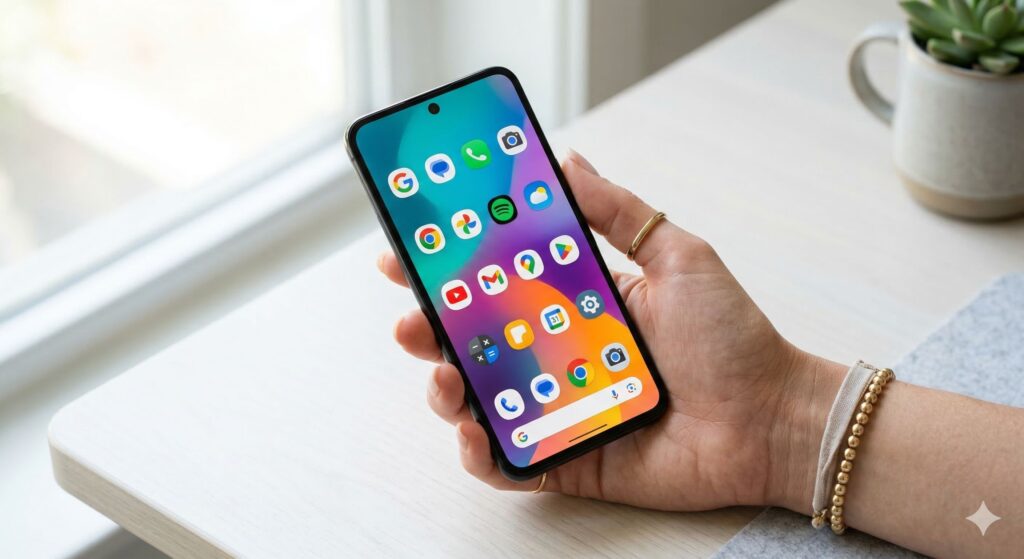
Your smartphone is only as smart as the apps on it. The best free Android apps for daily use in 2026 can transform how you work, communicate, and live. Whether you are a student, a professional, or someone who just wants a smoother day — the right apps make all the difference.
In this guide, you will discover apps that are genuinely useful. Not just popular. Actually useful, every single day.
Why Choosing the Right Android Apps Matters
Most people install apps and forget about them. However, the apps you use daily shape your habits, your focus, and your productivity. A poorly chosen app wastes your time. A great one saves hours every week.
The Real Cost of Bad Apps
Think about it this way. If an app takes 10 extra minutes to use each day, that is over 60 hours lost every year. As a result, choosing quality apps is not just a preference — it is a time investment.
Furthermore, bloated apps drain your battery and slow your phone. In 2026, light, fast, and free apps are winning.
Key benefits of choosing the right apps:
- Save time on repetitive tasks
- Reduce phone storage usage
- Improve focus and reduce screen clutter
- Get more done without spending money
Real-life example: A freelance designer switched from three separate tools to two well-chosen free apps. She saved 45 minutes daily on file management alone.
1. Google Keep — Your Second Brain for Notes
Google Keep is one of the most underrated free apps on Android. It is simple, fast, and syncs across all your devices instantly.
What Makes It Special
You can add notes, voice memos, checklists, and images. Specifically, the color-coding feature helps you organize ideas visually. Labels let you group notes by project or topic without any friction.
Practical uses:
- Grocery lists that sync with your partner’s phone
- Voice notes while driving
- Quick ideas captured before you forget them
- Meeting checklists before important calls
Real-life example: A small business owner uses Google Keep to manage daily task lists across her team. She creates shared notes that update in real time for everyone. Therefore, no one misses a task.
Furthermore, Google Keep works offline. So even without internet, your notes are always accessible. That reliability is rare in a free tool.
Main benefits:
- Zero cost, no ads in the core experience
- Works on all devices with one Google account
- Lightning fast — no loading delays
- Voice-to-text feature saves typing time
2. Microsoft Launcher — Make Your Phone Feel New
The default Android launcher on most phones is boring. Microsoft Launcher changes that completely. It is free, clean, and highly customizable.
Why It Stands Out in 2026
Microsoft Launcher lets you organize your home screen your way. You can set up a daily agenda, access your to-do list, and see recent documents — all from one swipe.
What you can customize:
- Wallpapers with daily Bing images
- App drawer layout and sorting
- Gesture controls for faster navigation
- Widget sizes and positions
Real-life example: A college student set up Microsoft Launcher to show his class schedule and upcoming deadlines on his home screen. He no longer misses assignment due dates.
In addition, the integration with Microsoft 365 apps is seamless. If you use Word, Excel, or Outlook, this launcher becomes even more powerful. As a result, your phone becomes a real productivity hub.
Why it works for daily use:
- Replaces your default launcher instantly
- No technical knowledge required
- Integrates with calendar and tasks
- Keeps your phone distraction-free
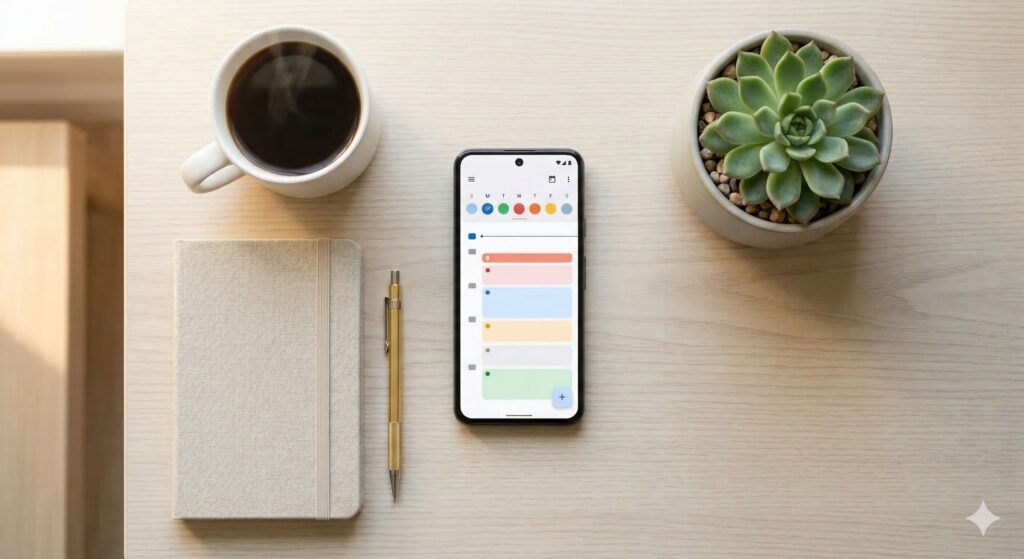
3. Notion — The All-in-One Workspace
Notion has grown from a startup tool into a daily essential for millions. The free plan in 2026 is generous enough for most personal users.
How Notion Fits Into Daily Life
You can use Notion as a journal, a project manager, a reading list, or a habit tracker. Specifically, the database feature lets you create linked systems that actually work together.
Popular ways people use Notion daily:
- Morning routines and habit tracking
- Personal budgets and expense logs
- Book notes and reading summaries
- Work project management
Real-life example: A remote worker built a full freelance dashboard in Notion. It tracks client projects, invoices, and deadlines. He used to juggle three different apps. Now he opens just one.
However, Notion has a small learning curve. Give yourself one week. After that, it becomes second nature.
Benefits worth knowing:
- Works offline after initial sync
- Free plan covers most personal needs
- Templates available for instant setup
- Cross-platform — phone, tablet, and desktop
[Check out our Other Blogs at : PawasPurrs.in ]
4. Bitwarden — Keep Your Passwords Safe for Free
Password security is no longer optional. Bitwarden is the best free password manager on Android in 2026. It is open source, trusted, and genuinely free — not a trial.
Why Password Managers Are Essential
Most people reuse passwords. That is dangerous. Bitwarden creates strong, unique passwords for every site. It stores them securely and fills them automatically on your phone.
Features that matter:
- Auto-fill passwords in apps and browsers
- Generate strong passwords instantly
- Store secure notes like PINs and card numbers
- Two-factor authentication support
Real-life example: A teacher was locked out of four accounts in one month due to forgotten passwords. After switching to Bitwarden, she has not had a single lockout in over a year.
Furthermore, Bitwarden uses end-to-end encryption. Even Bitwarden itself cannot read your data. As a result, your passwords are safer than in any browser’s built-in password storage.
Learn more about Bitwarden’s open-source security at bitwarden.com
Why it beats competitors:
- Completely free with no paywalled essentials
- Available on all platforms
- Trusted by security professionals worldwide
- No ads, no tracking
5. Canva — Design Anything on Your Phone
Canva on Android is a design powerhouse. The free version gives you access to thousands of templates. In 2026, the mobile app is nearly as powerful as the desktop version.
What You Can Create in Minutes
From Instagram posts to business presentations, Canva handles it all. Specifically, the drag-and-drop editor makes design accessible to non-designers.
Common daily uses:
- Social media graphics for personal or business accounts
- Birthday and event invitations
- Resumes and one-page portfolios
- Infographics for school or work
Real-life example: A food blogger uses Canva daily to create recipe graphics. She went from spending two hours per post to just 20 minutes. Her engagement on Instagram doubled in three months.
In addition, Canva’s free library includes millions of stock photos, icons, and fonts. Therefore, you rarely need to pay for extra assets.
Why it belongs on every Android:
- No design skills required
- Free templates for nearly every purpose
- Download as JPG, PNG, or PDF
- Share directly to WhatsApp, Instagram, or email
6. Spotify — Free Music for Every Mood
Spotify’s free tier on Android remains one of the best audio experiences available without paying. In 2026, it offers curated playlists, podcasts, and audiobooks.
Making the Most of Free Spotify
The free version does include ads between songs. However, the shuffle-play model still works well for daily listening. Specifically, Spotify’s algorithm learns your taste and improves over time.
Best features on the free plan:
- Daily Mix playlists tailored to your taste
- Podcast library with millions of episodes
- Download playlists (with Spotify Premium only — free users stream online)
- Collaborative playlists with friends
Real-life example: A gym-goer created a workout playlist on Spotify that updates automatically with new high-energy tracks. He never has to manually update it. The algorithm handles everything.
Furthermore, Spotify’s podcast library is enormous. You can learn a new skill, stay updated on world news, or simply laugh — all for free.
Why it works for daily entertainment:
- Music and podcasts in one app
- Personalized recommendations that improve weekly
- Works on Bluetooth speakers and earphones seamlessly
- Minimal data usage option available

7. Google Photos — Never Lose a Memory Again
Google Photos remains the best free photo backup app on Android in 2026. It automatically backs up your images and videos so you never lose them — even if your phone breaks.
Smart Features That Save Time
Google Photos uses AI to organize your pictures automatically. It creates albums by faces, places, and events — without you doing anything.
Daily use cases:
- Automatic backup of every photo and video
- Search photos by object (example: “beach”, “dog”, “birthday”)
- Edit photos with one-tap AI enhancements
- Share albums with family instantly
Real-life example: A mother of three lost her phone last year. Because Google Photos was set to auto-backup, she recovered every single photo of her children within minutes on a new device.
In addition, the free storage is now optimized storage — photos are slightly compressed but look identical on screens. As a result, you can store thousands of photos at no cost.
Why it is a daily essential:
- Auto-backup happens silently in the background
- Shared library feature for families
- Powerful search that understands natural language
- Works on all Android devices regardless of brand
8. Duolingo — Learn a Language in 10 Minutes a Day
Duolingo turns language learning into a habit you actually keep. Its free plan is surprisingly complete. In 2026, it supports over 40 languages with game-like lessons.
How It Fits Into a Busy Schedule
Duolingo’s lessons are designed for short bursts. Specifically, each lesson takes five to ten minutes. You can learn during your commute, at lunch, or before bed.
What makes it effective:
- Streaks keep you accountable daily
- Bite-sized lessons reduce overwhelm
- Speaking, listening, reading, and writing practice
- Immediate feedback on every answer
Real-life example: An IT professional learned conversational Spanish in eight months using only Duolingo’s free version for 10 minutes daily. He is now comfortable in meetings with Spanish-speaking clients.
Furthermore, the gamification is genuinely motivating. You earn XP, unlock badges, and compete on leaderboards. Therefore, it feels more like a game than homework.
Why it earns a daily spot:
- Free with full access to core lessons
- Available offline for downloaded content
- Science-backed spaced repetition method
- Fun enough to actually stick with
Are free Android apps safe to use in 2026?
Yes, as long as you download apps from the Google Play Store. Always check reviews, permissions requested, and the developer’s reputation before installing.
Do these free apps contain a lot of ads?
Most apps on this list are either fully ad-free or have very minimal, non-intrusive ads. Apps like Bitwarden and Google Keep have no ads at all.
Can I use all these apps without a data connection?
Several of them, including Google Keep, Notion, and Duolingo, work offline. Spotify and Google Photos require internet for streaming and syncing.
Will these apps slow down my Android phone?
No. All apps on this list are optimized for performance. In fact, replacing bloatware with these focused apps can make your phone faster.
Which of these apps is best for students?
Google Keep, Notion, and Duolingo are especially useful for students. Together, they cover note-taking, project management, and skill-building at zero cost.
Conclusion — Start With One App Today
You now have a clear, honest list of the best free Android apps for daily use in 2026. Each one solves a real problem. Each one is genuinely free. And each one fits naturally into a busy day.
Here is a quick recap of the highlights:
- Google Keep for fast, synced note-taking
- Microsoft Launcher for a smarter home screen
- Notion for all-in-one productivity
- Bitwarden for unbeatable password security
- Canva for effortless design on the go
- Spotify for music and podcasts anywhere
- Google Photos to protect every memory
- Duolingo for daily language learning
You do not need to install all eight at once. Pick one or two that match your biggest daily challenge. Install them today. Give them one week. You will wonder how you managed without them.
Which app are you adding to your phone first? Drop your answer in the comments below — we read every single one.